Tree Removal
Certified Tree Removal in Little Rock, Cabot, Sherwood & Central Arkansas
Removing a tree is rarely a simple decision, and it’s not one we make lightly. Every removal is evaluated against the standard set by Chad Bryant, a Board Certified Master Arborist, before any crew shows up with equipment. Call (501) 606-1309 to have a certified arborist look at a tree on your property in Little Rock, North Little Rock, Cabot, Sherwood, Jacksonville, Searcy, Beebe, Lonoke, or Carlisle.
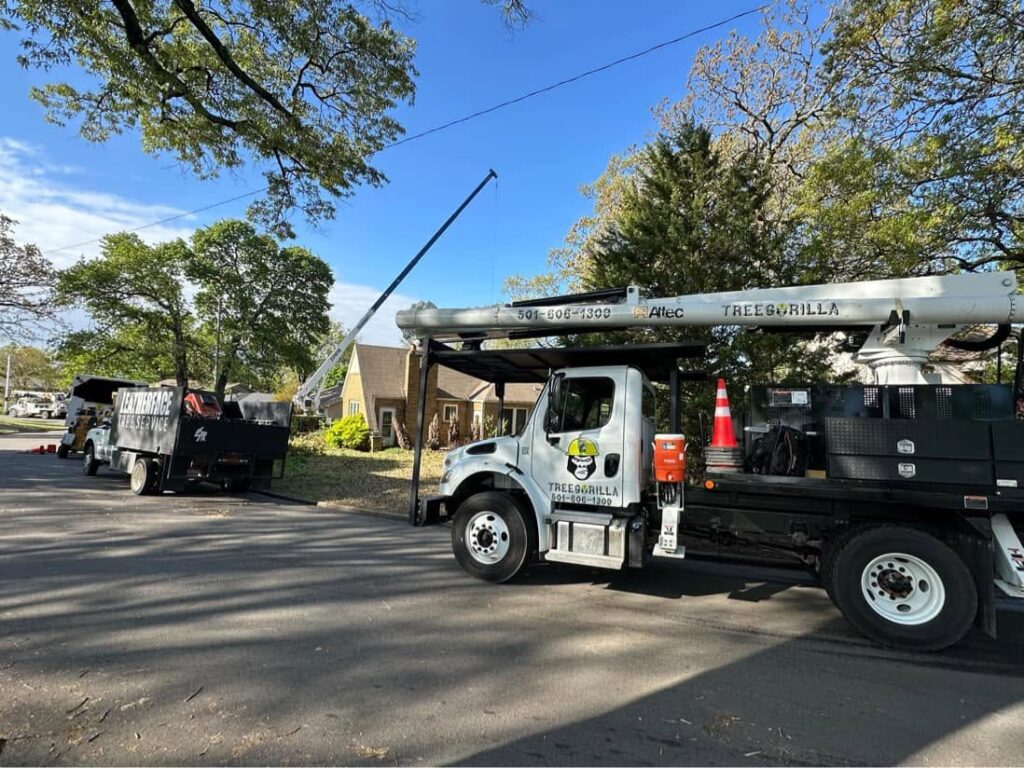
When a Tree Needs to Come Down in Central Arkansas
Some removals are obvious: a tree split by storm winds, a trunk hollowed out by decay, or a root system so compromised the tree is leaning further every season. Others are less clear-cut — a tree that looks fine from the ground but has internal structural problems only a trained eye would catch.
We remove trees for homeowners dealing with disease, storm damage, and trees that were simply planted in the wrong spot for how large they’ve grown. The goal is never to remove a tree that could reasonably be saved, cabled, or pruned back into a safer shape instead.
That’s the difference a Board Certified Master Arborist brings to the call. A removal recommendation from us comes from an actual structural and biological assessment, not a default toward the option that requires the most equipment.
How Treegorilla Removes a Tree Safely
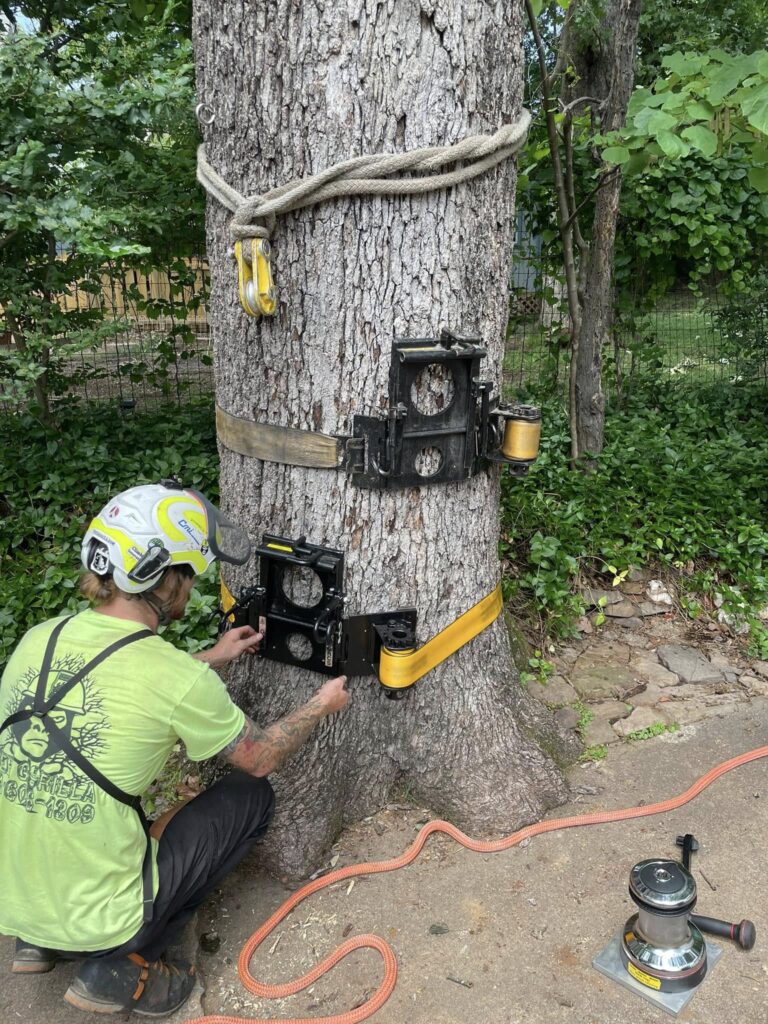
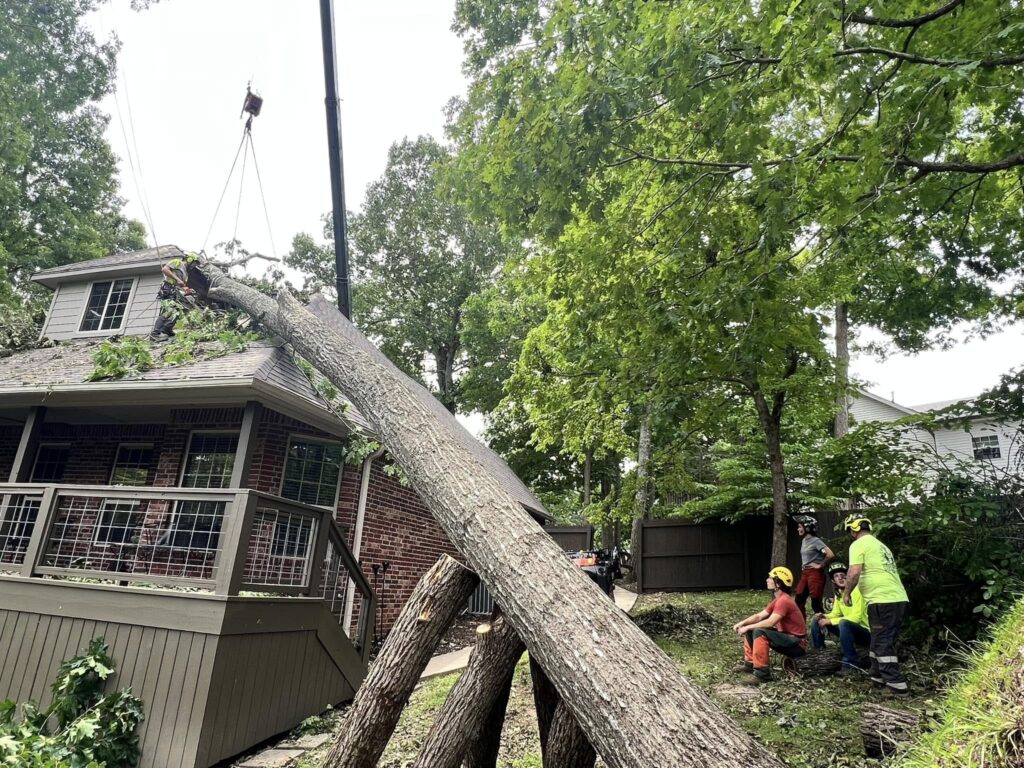
Every removal starts with a look at access. Trees with open canopies and clear ground access are often handled from a bucket truck, which lets the crew work efficiently and with tight control over where each cut piece falls. Denser canopies or tight backyard spaces without truck access call for climbing instead.
Our crews are trained by certified arborists in proper climbing technique, and spikes never touch a tree during a live removal unless the tree is already coming down anyway, since spiked boots can gouge bark and create wounds that invite disease in a tree meant to be saved. Low-impact removal is a priority on every job, protecting fences, structures, and surrounding landscaping as the tree comes down piece by piece rather than all at once.
Rigging plays a big part in that control. Ropes and pulley systems let a climber lower heavy sections of trunk and limb slowly to the ground instead of letting gravity decide where they land, which matters most on properties where a tree is growing close to a house, a fence, or a neighbor’s yard.
Removal Decisions for Central Arkansas's Oaks, Elms, Hackberries & Pines
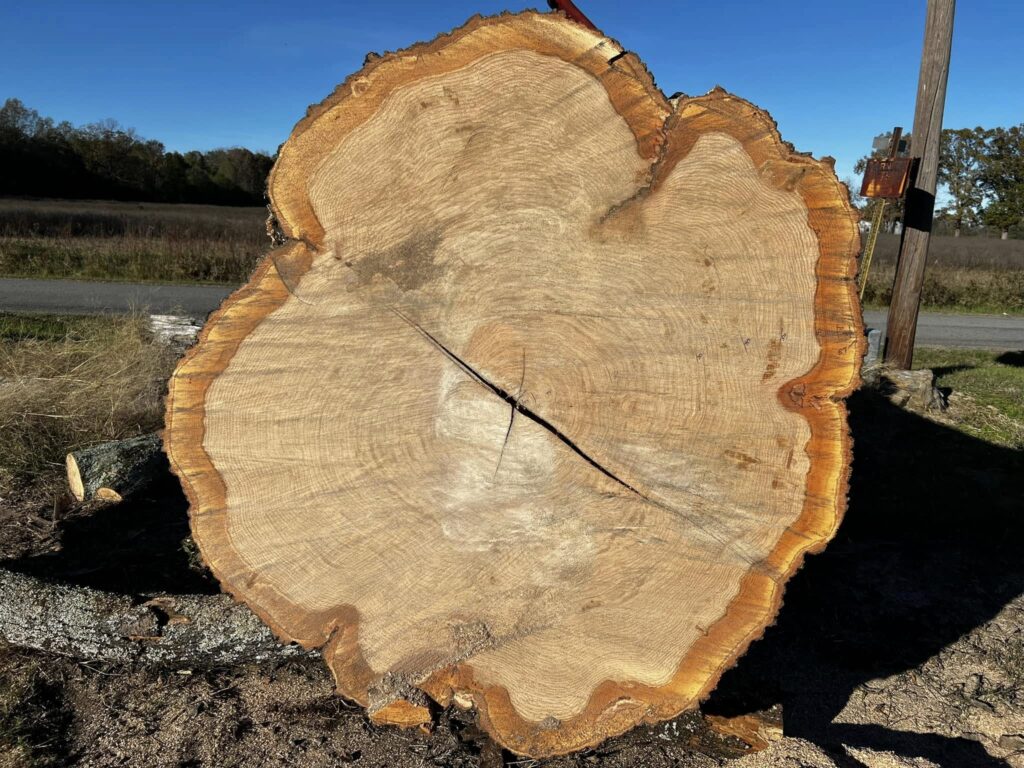
Central Arkansas properties are shaped by a specific mix of species — oaks, elms, hackberries, sweet gums, and pines — and each one fails differently. Oaks can hold a deceptively healthy-looking canopy over serious internal decay, while pines tend to give more visible warning through needle drop and resin bleeding before a structural failure.
Knowing those patterns changes how we approach a removal call. A hackberry with early decay might be a candidate for cabling and continued monitoring, while the same symptoms in an older, weaker-wooded species might point straight to removal instead.
Sweet gums and elms bring their own considerations too, from shallow root systems that can shift with soil moisture to a tendency toward included bark at branch unions that weakens the whole structure over time. That variation is part of why a removal call on one species doesn’t automatically apply to another growing right next to it.
Emergency Tree Removal After Storm Damage
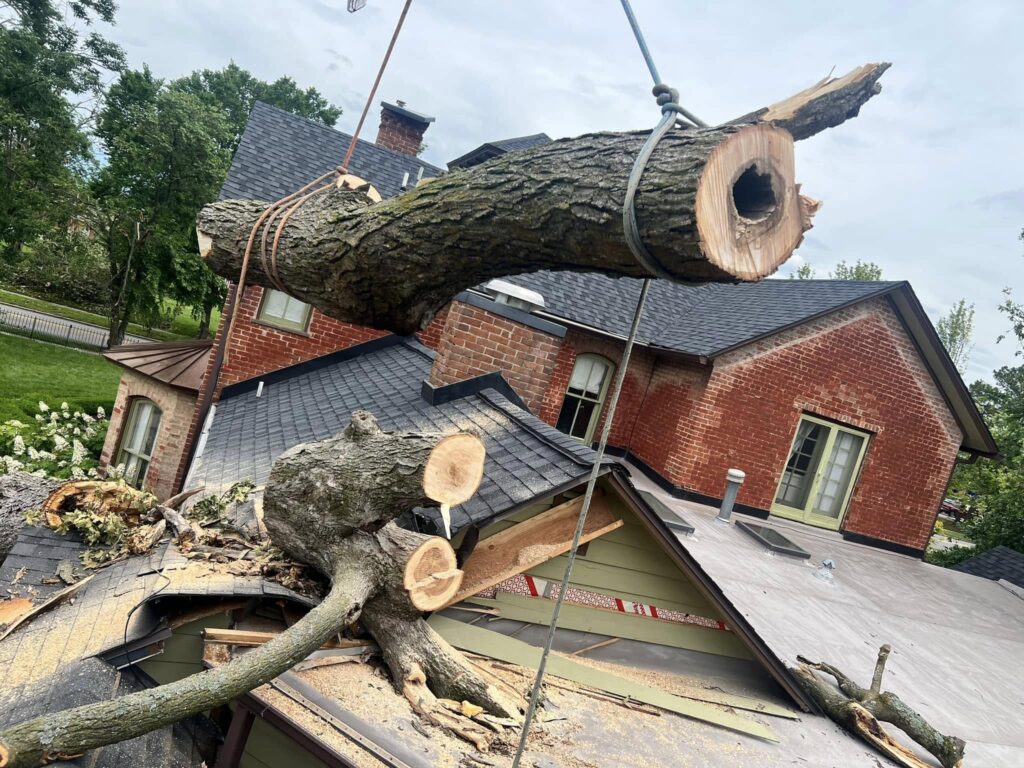
Ice storms, straight-line winds, and severe spring weather regularly bring trees down across Central Arkansas without warning. When that happens on your property — threatening a roof, a driveway, or a power line — we prioritize emergency removal ahead of routine scheduled work.
Storm-damaged trees carry their own risks beyond the obvious break, since a tree that’s already partially failed can behave unpredictably during removal. Our crews assess the full tree, not just the visible damage, before deciding how to safely bring it down.
Emergencies don’t wait for business hours, and we treat them accordingly. A call about a tree threatening a structure gets a faster response than a routine pruning request, because the risk to people and property changes the math on how quickly the job needs to happen.
What Happens After a Tree Comes Down
Once a tree is removed, the stump is usually the next decision. Many customers choose to have it ground down right away so the yard is usable again, while others wait and schedule grinding separately. Either way, we clear debris from the property as part of the job rather than leaving cleanup as a separate cost.
Removal doesn’t have to mean losing the tree from your landscape entirely. Property owners who want to replace a removed tree with a better-suited species can talk to us about tree planting as part of the same conversation.
That’s often the more forward-looking move for a lot with a history of the wrong tree in the wrong place — choosing a species suited to the soil and space from the start rather than repeating the same removal decision again in twenty years.
Contact Us Today
Schedule a Tree Removal Consultation with a Board Certified Master Arborist
If you have a tree in Little Rock, Cabot, Sherwood, Jacksonville, or anywhere else in Central Arkansas that you’re worried about, call (501) 606-1309 or email info@treegorilla.com. We’ll gather the details of your property and, for most removals, recommend a consultation first so the decision is based on an actual assessment rather than a guess made sight unseen.
Once a removal is confirmed, you’ll get a written proposal within two days broken into what’s included, what’s recommended, and what’s optional, and most jobs are completed within two weeks depending on scope and storm activity.
Payment gets finished once the work is done, either in person or through a final invoice, and we follow up afterward to make sure the property was left the way you expected. That follow-through is part of the same Board Certified Master Arborist standard behind every job we take.